A Close Look at the Yellow Fishing Pole Embroidery Design
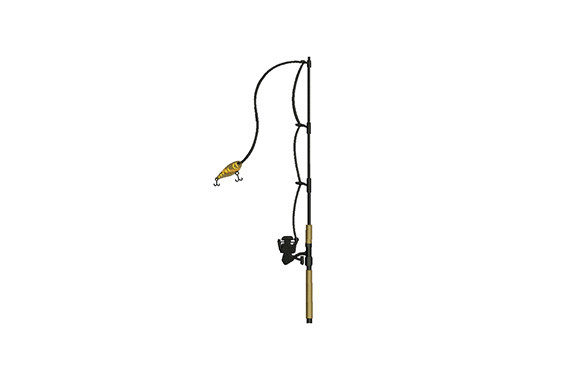
When a design like Yellow Fishing Pole comes across my screen, I’m not just looking at a graphic. I’m evaluating it as a future physical object—thread on fabric, a product in a client’s hands, a line item in a shop listing. This simple, cheerful motif immediately suggests a certain mood: it’s nostalgic, relaxed, and inherently friendly. The shape is straightforward, a classic silhouette that avoids over-complication. That’s a good sign for embroidery; clean lines usually translate well into stitches.
The First Project That Came to Mind
I pictured it on a sturdy canvas tote bag almost instantly. This isn’t just a random thought. A tote is a practical, everyday item, and this design’s theme aligns perfectly with a sense of outdoor leisure or a love for simple pastimes. It feels like a design someone would choose to personalize a gift for a father, a grandfather, or a friend who spends weekends at the lake. The yellow color, if stitched with a bright, sunny thread, would pop nicely against the natural or navy background of a bag. It’s not overly masculine or feminine—it’s approachable, which broadens its giftability.
Where This Design Finds Its Natural Home
Beyond the tote, this Yellow Fishing Pole has a versatile charm. I’d confidently stitch it on the corner of a tea towel for a cottage-style kitchen, or on a pillow cover for a den or cabin-themed room. For a small business owner crafting boutique apparel, it could be a sweet, small accent on a child’s sweatshirt or a camp-themed baby blanket. As an apparel decorator, I see it working well as a left-chest design on a polo shirt or a subtle detail on a camp cap. Its simplicity is its strength here; it doesn’t demand a large hoop space, making it economical for multiple placements.
The Practical Stitch-Out: What to Consider
In real-life embroidery, the devil is in the details. A design’s charm on screen must survive the translation to satin stitches, fill stitches, and running stitches. For Yellow Fishing Pole, the key will be contrast. That bright yellow needs to be chosen carefully against your fabric. On light fabrics, a vibrant, citrusy thread will shine. On dark fabrics—like a black or dark green sweatshirt—you’ll need a truly bold, opaque yellow to prevent it looking muddy. Always test on scrap fabric first.
Stitch density is another silent factor. While I don’t have the exact count for this design, the pole’s linear nature suggests it might use satin stitch for the rod. Satin stitch on curved surfaces or thin fabrics can be tricky. For a project like a cap, where the surface is curved, you’d need excellent stabilizer and possibly a smaller hoop size to keep those lines crisp. On thin t-shirt fabric, a very good cut-away stabilizer would be essential to prevent puckering and to support that stitch density.
Caution Zones for Application
This design would likely struggle if forced into a very small hoop size where detail is compressed. The pole tip or the line detail could become a blur if the design is miniaturized too much. Similarly, on highly textured fabrics like some blankets or heavy sweaters, the clean lines might not read as clearly. For products destined for frequent washing—like baby clothes or kitchen linens—you’d want to ensure the stitch structure is solid and secure, with good thread anchoring, to maintain that visual appeal over time.
Beyond the Stitch: The Business and Gift Perspective
For the craft business owner, Etsy seller, or digital product seller, this design represents a clear, sellable theme. It taps into the camping category without being aggressive or overly technical. In a printable mockup for a digital shop, it would show well as a simple, recognizable graphic. Customers looking for a personalized gift or custom apparel for a fishing enthusiast would recognize it immediately—that recognition builds trust and engagement.
The handmade presentation matters. A well-stitched Yellow Fishing Pole on a clean, finished product looks professional and thoughtful. It adds value not through complexity, but through charm and appropriateness. For brand consistency, if your shop focuses on outdoor, rustic, or nostalgic themes, this design is a coherent asset. Its giftability is high because it’s specific enough to feel personal, yet universal enough that many would appreciate it.
Notes for the Embroidery Designer Before Hooping
My standard process applies here: always test the embroidery file on your scrap fabric of choice. Check the thread color contrast in both natural and indoor light. Inspect the small details in the stitched-out sample—are any corners too tight or stitches too dense? Run it through black and white mockups too, to see how the form holds up without color. Confirm the hoop size you plan to use is appropriate by looking at the design’s dimensions. And crucially, always confirm the licensing terms before selling finished items or using it in commercial embroidery projects. The product description mentions it comes with multiple embroidery file formats for multiple machines, so verifying compatibility with your specific setup is a necessary first step.
In the end, Yellow Fishing Pole isn’t a flashy design, but it’s a solid, emotive one. It belongs to a world of relaxed afternoons and personalized, heartfelt gifts. Stitched well, on the right product, with proper embroidery technique, it will deliver exactly what it promises: a beautiful, cheerful accent that feels both handmade and perfectly placed. That’s the kind of design that keeps clients coming back and shops feeling authentic.